
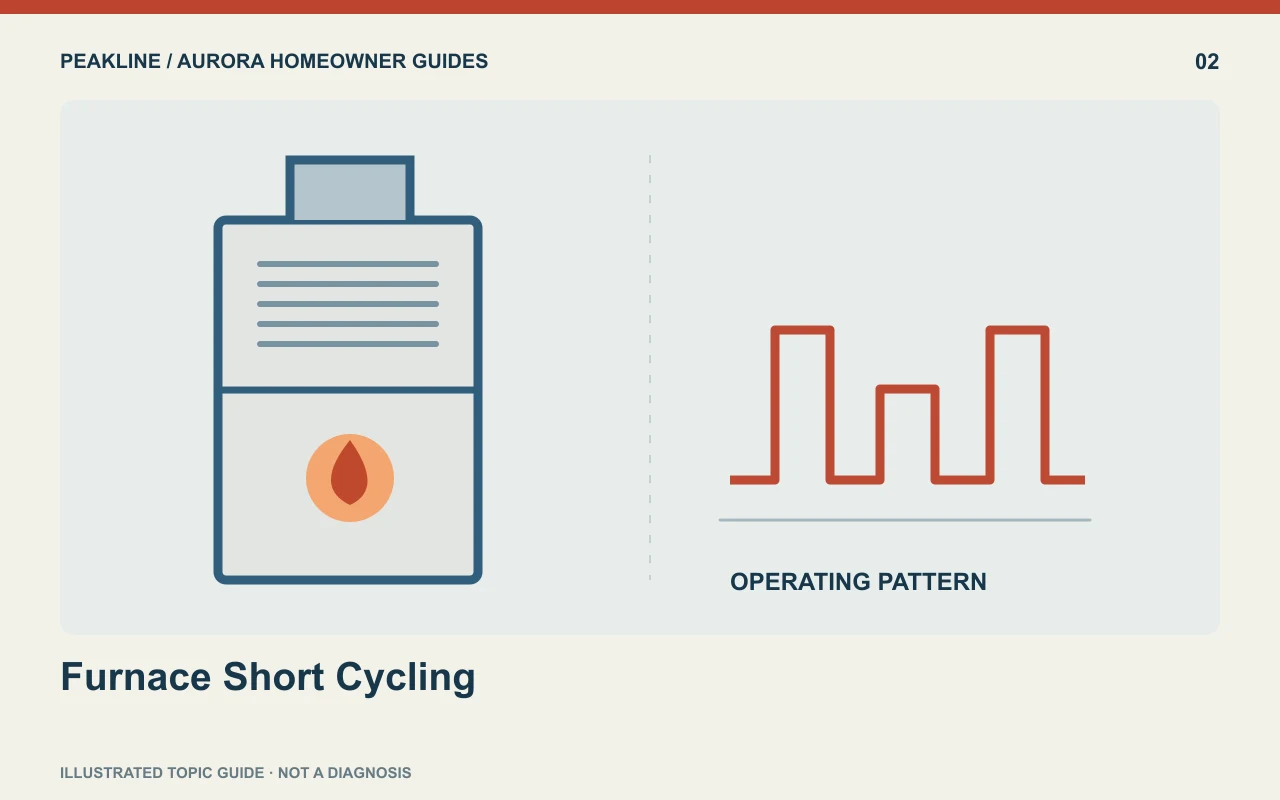
Time the pattern without forcing another cycle
Note when the thermostat calls, when airflow begins and when the system stops. Distinguish the burner stopping from the blower stopping if that can be observed without opening equipment. A remembered estimate of every few minutes can mean different things to different people. A short written timeline helps a technician compare the complaint with the actual sequence and conditions during the assessment.
Recent changes belong in the description
Tell the provider about a new thermostat, a different filter, closed rooms, duct work or a previous repair. These facts may affect the investigation, but none independently proves the cause. Avoid repeatedly resetting a furnace or changing multiple settings in an attempt to keep it running. That can remove useful context and is not a substitute for identifying why a control or safety device is interrupting operation.
Question a part recommendation in context
Ask which measurement or observation supports the proposed repair and whether airflow, controls and the heating sequence were evaluated. If oversized equipment is suggested as an explanation, ask what load and operating evidence supports that conclusion. Do not accept a universal cycle-length rule as a diagnosis for every furnace. Keep the final report so a recurring complaint can be compared with the same operating conditions.
Explore the service behind the question
Read the furnace repair guide and compare the complete written scope before arranging work. Confirm the provider’s identity, fees and availability for your property.