
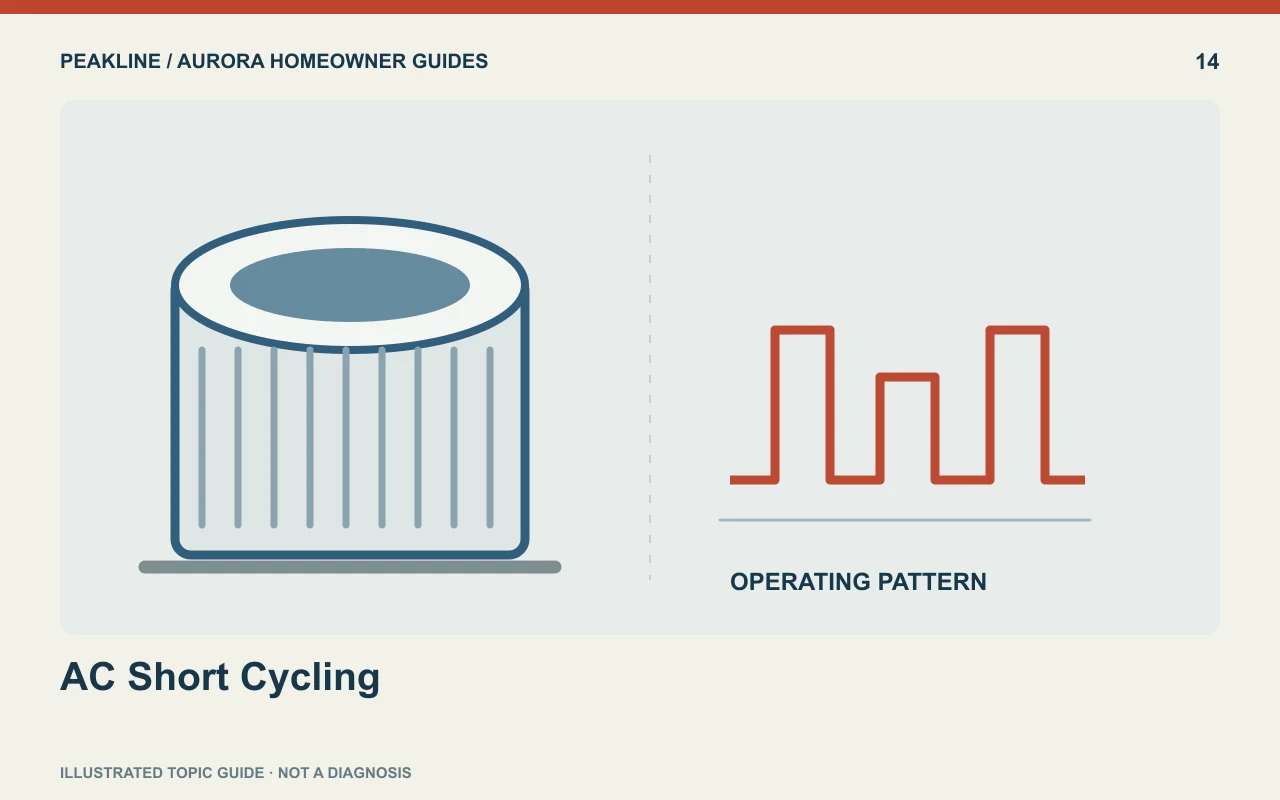
Describe what stops and what keeps running
Record whether the indoor blower, outdoor equipment or thermostat call ends first if that can be observed safely. Note the approximate run and off periods without forcing repeated starts. Also record room temperature and whether the setpoint was reached. Different sequences can be described casually as short cycling, and the technician needs the actual pattern rather than a single label.
Include control changes and recent work
Tell the provider about thermostat replacement, scheduling changes, filter changes, earlier repairs and any power interruptions. Do not repeatedly reset a breaker or change several settings to keep the AC running. An interrupted sequence may involve controls, protection or other equipment conditions that need model-specific assessment. A brief cycle is not enough evidence to select a capacitor, thermostat or larger system remotely.
Make the verification method part of the scope
Ask how the proposed repair follows the findings and how the operating pattern will be checked afterward. If capacity or thermostat location is offered as the explanation, ask for the relevant building and control evidence. Keep the final settings and any recorded readings. A change that temporarily lengthens one cycle does not necessarily establish that the original complaint has been fully resolved.
Explore the service behind the question
Read the AC repair guide and compare the complete written scope before arranging work. Confirm the provider’s identity, fees and availability for your property.