
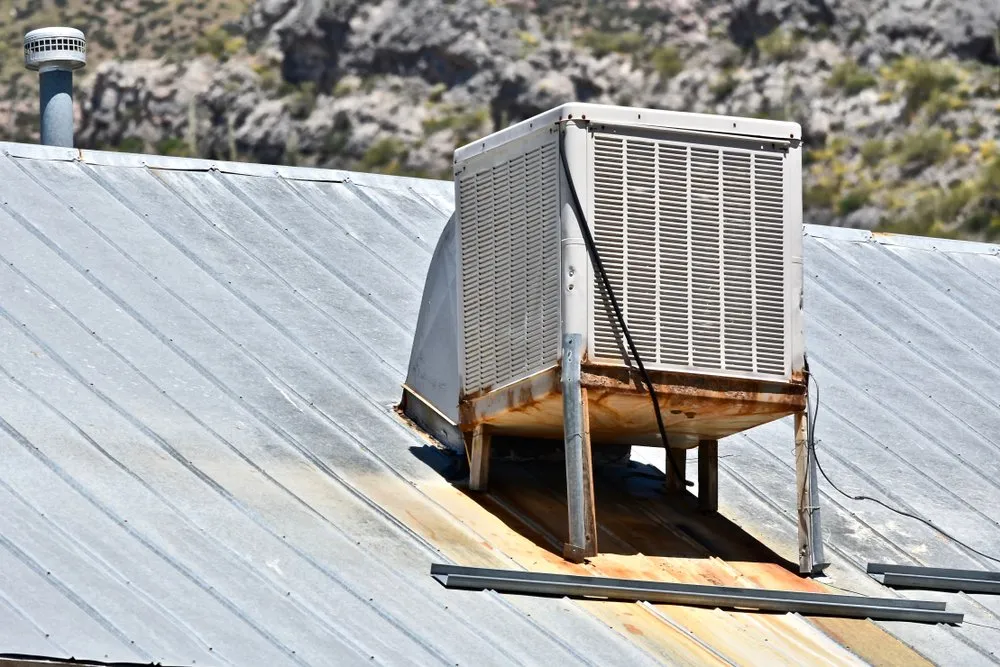
Conversion changes how the home is cooled
Evaporative cooling and refrigerant-based air conditioning work differently. A conversion proposal should explain the intended system, distribution and controls rather than promise that every existing duct is automatically suitable. Tell the contractor which rooms are uncomfortable, how the cooler is operated and whether the house has a furnace duct system. Ask whether a central system or another arrangement is being proposed and why.
Removal is part of the project boundary
A rooftop cooler can involve a roof opening, curb, water supply, drain and electrical connection. Ask who disconnects and removes the old equipment and who closes and weatherproofs the opening. Confirm whether roofing work, ceiling repairs or unused duct removal is included. These responsibilities should be written down; an air-conditioning equipment price alone does not describe the complete conversion.
Compare operation and installation together
Ask about the cooling load, compatible indoor equipment, electrical requirements, condensate route and thermostat. Discuss the differences in ventilation, water use and moisture behavior without assuming an exact future utility saving. Confirm applicable approvals and commissioning records. There is no universal conversion price or guaranteed completion time because homes and existing arrangements differ.
Swamp cooler or central AC: a side-by-side view
| Evaporative (swamp) cooler | Central AC | |
|---|---|---|
| How it cools | Evaporates water into dry air | Removes heat with refrigerant |
| Windows | Open a little to let air out | Closed |
| Water use | Uses water all summer | None, only a condensate drain |
| Winter | Needs draining and a cover | No winterizing |
| Humid days | Works poorly | Works normally |
Questions homeowners ask
Can my ducts be used for central AC after a swamp cooler?
Sometimes. A swamp cooler often blows through its own large ceiling vent, while the furnace ducts may be too small for AC. The installer should check the furnace ducts and blower. If they are too small, ask about duct changes or a ductless option.
What happens to the old swamp cooler?
It should be disconnected from water and power, removed, and the roof or wall opening sealed and patched. These steps are often left out of a low quote. Ask who does the roof patch and whether it is included in the price.
Is a swamp cooler cheaper to run than AC?
Usually a swamp cooler uses less electricity, but it uses water and needs yearly start-up and winterizing. It also cools less on humid summer days. Many homeowners switch for comfort with closed windows rather than lower bills.
Where swamp cooler conversion calls are covered
Swamp cooler conversion calls are connected for homes in Aurora and these nearby cities: