
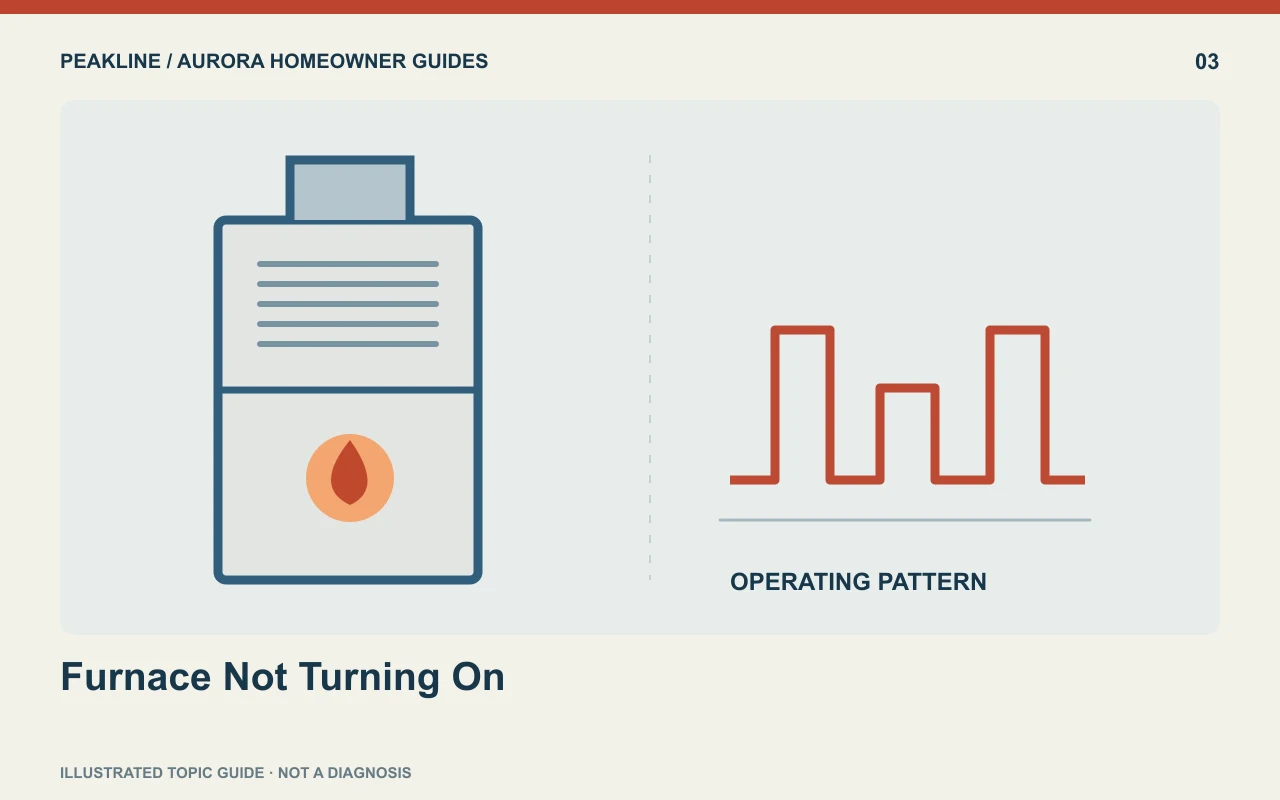
Start with what is actually unresponsive
Is the thermostat blank, is the display active without a heat response, or does equipment start and then stop? Those are different descriptions. Note the current setpoint, room temperature and operating mode using the normal controls. Mention any power interruption or recent electrical work. Do not open electrical panels or assume that a working thermostat display proves every connected component has power.
Preserve the sequence and visible messages
Record an error message, flashing indicator visible from outside the cabinet or a sound heard just before the system stops. Explain whether the fault appeared suddenly or followed intermittent operation. Avoid bypassing a door switch, pressure switch or other interlock to test an idea. The technician needs the model information and appropriate measurements to decide why the system is not completing a heat call.
Confirm the visit and its scope
Tell the provider if the home is steadily cooling or if people may be unable to remain comfortable while waiting. Confirm current availability rather than assuming round-the-clock dispatch. Ask whether the diagnostic visit covers the control circuit and equipment and how additional testing is charged. A booking conversation can establish the next step; it cannot establish the failed part or final repair cost.
Explore the service behind the question
Read the furnace repair guide and compare the complete written scope before arranging work. Confirm the provider’s identity, fees and availability for your property.