
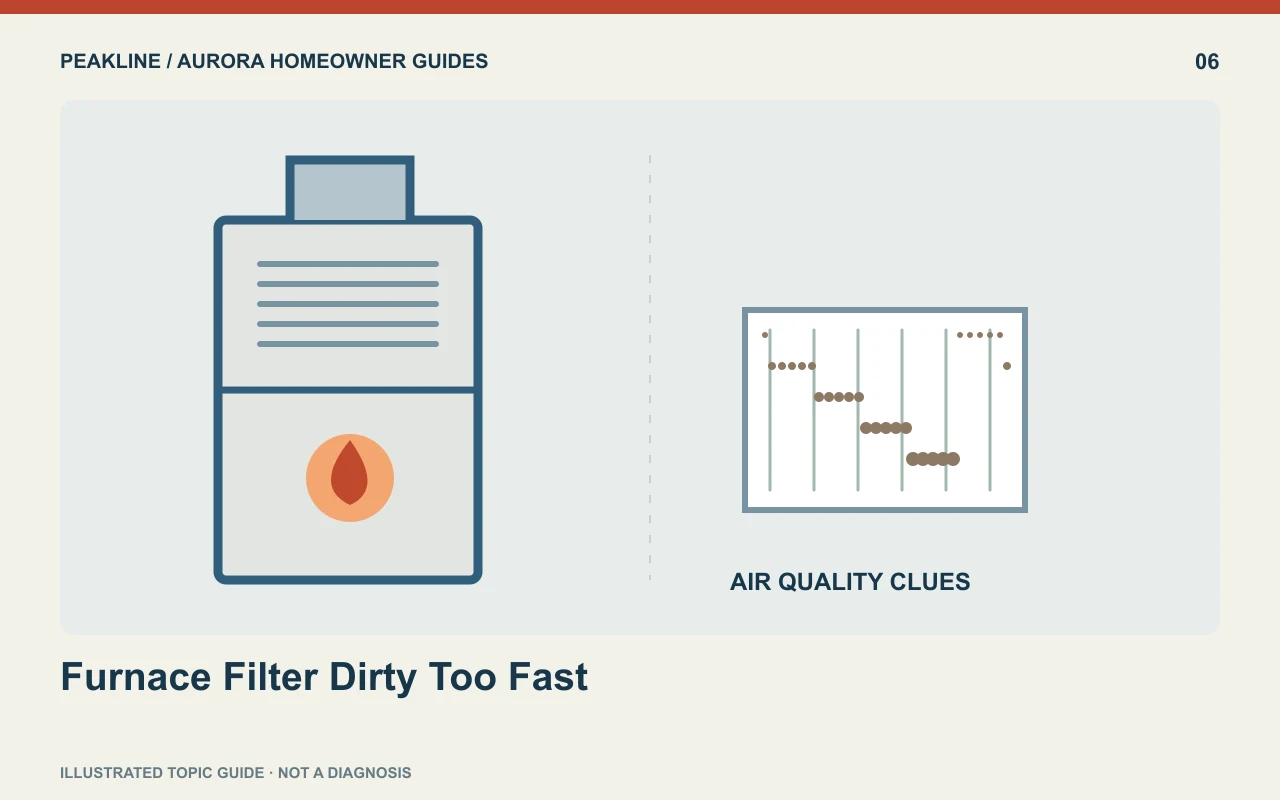
Compare the same filter over a known interval
Record the filter size, product type, installation date and approximate operating use. A photo taken when it is new and another at replacement is more useful than comparing different filters from memory. Note renovation dust, pets, open windows or changes in occupancy without assuming any one factor explains the loading. Follow the equipment and filter instructions for normal inspection and replacement access.
Appearance does not measure every airflow effect
A dark filter can prompt a maintenance question, but color alone does not establish the source of particles or the pressure drop through the installed filter. Ask whether the rack seals properly, whether there are multiple filters in the air path and what filter resistance suits the system. Do not stack filters or choose a higher rating solely because it appears more protective.
Ask whether the proposed fix addresses the source
If duct sealing, cleaning or filtration changes are recommended, ask which observed condition supports that scope. A dirty filter alone does not prove that every duct needs cleaning or that a new furnace is necessary. Discuss a replacement interval based on the actual arrangement and use. Keep any airflow or filter-rack findings with the service report so a later change can be compared fairly.
Explore the service behind the question
Read the furnace tune-up guide and compare the complete written scope before arranging work. Confirm the provider’s identity, fees and availability for your property.