
Describe the sound without approaching the unit
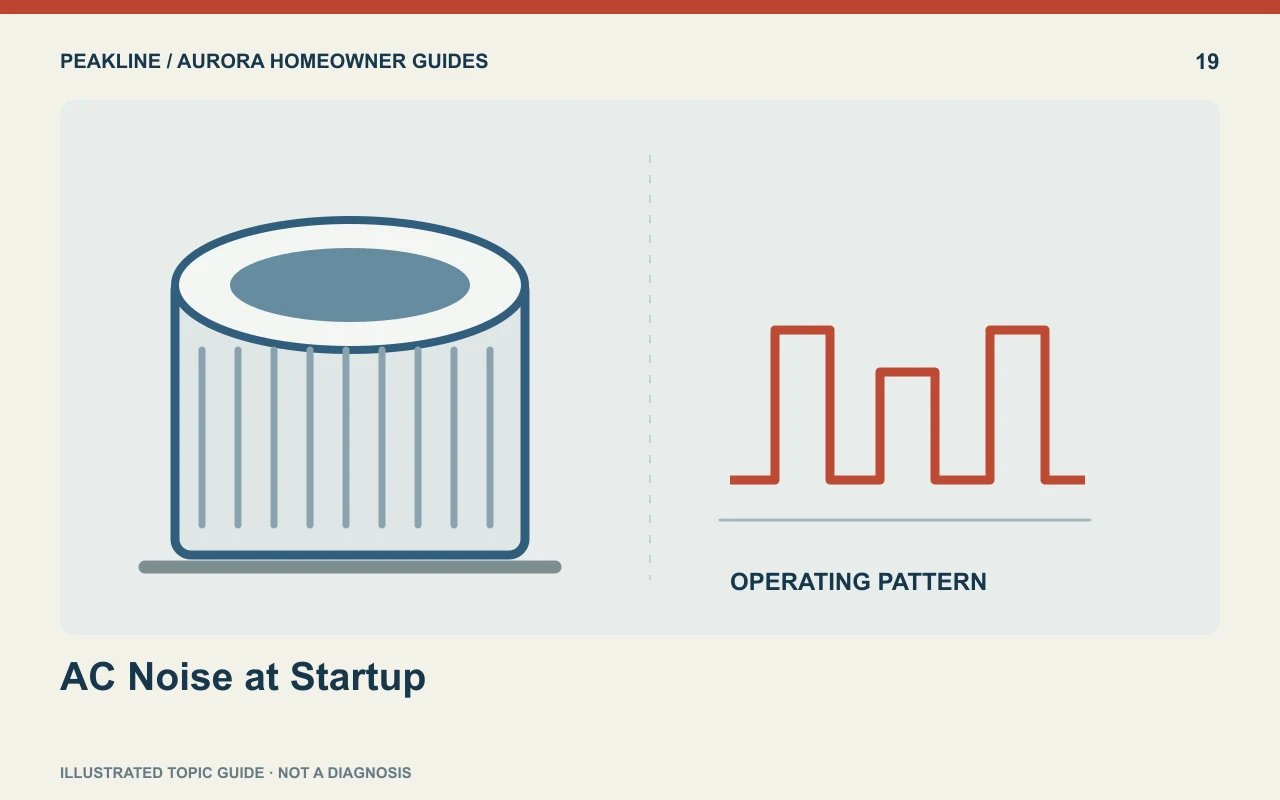
A rattle, buzz, squeal or impact can mean different things to different listeners. Record a short sample from a safe distance and note whether it happens before the fan moves, during startup or after shutdown. Mention whether the noise is new and whether cooling performance changed. Do not remove guards, touch panels near moving parts or keep restarting equipment merely to reproduce the sound.
Distinguish the unit from surrounding materials
Explain whether the sound seems to originate at the outdoor unit, indoor equipment, a duct or a nearby surface. Loose surroundings and equipment faults require different scopes. Do not assume that a familiar-looking bracket or panel is safe to adjust while the system is running. Ask the technician to identify the source supported by inspection and to explain any conditions that were not reproduced.
Confirm what the repair is intended to change
If a part, support or isolation change is proposed, ask why it addresses the observed sound and how the result will be checked. A quieter moment after service does not automatically explain an intermittent problem. Keep the sound recording and operating timeline with the invoice. If a recommendation involves complete equipment replacement, request the underlying findings and a separate repair-versus-replacement comparison.
Explore the service behind the question
Read the AC repair guide and compare the complete written scope before arranging work. Confirm the provider’s identity, fees and availability for your property.